Living near Purdue’s campus has provided me with lots of opportunities to engage with the university. Given this proximity, I was recently curious as to what opioid-related research might be going on at Purdue.
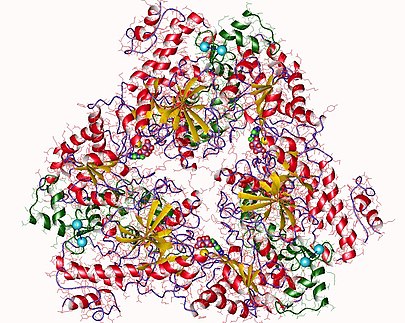
An article from 2018 relates well to my previous post on opioid alternatives. It describes the development of a new compound that can manage pain with minimal potential to cause addiction. It achieves this balance by acting in a highly selective manner when inhibiting adenylyl cyclase 1 (AC1), an enzyme that synthesizes cyclic AMP (cAMP), which regulates physiological responses. This could decrease symptoms of withdrawal, making the formation of a dependency less likely (Watts & van Rijn, 2018).
Another article from 2019 expands upon the potential of the aforementioned compound. It mentions that the reason the AC1 inhibitor has less addictive qualities is that it targets the enzyme directly, rather than interacting with opioid receptors (Adam, 2019).
Given that 50 million Americans report living with chronic pain, this advancement in non-addictive opioid alternatives is timely (Adam, 2019). The latest article from Purdue is over a year old so I will contact the Purdue Office of Technology Communication to find out whether they have secured a patent for this compund.
Sources:
Adam, C. (2019, July 9). The power of the brain to fight opioid addiction, treat chronic pain. Retrieved April 06, 2021, from https://www.purdue.edu/newsroom/releases/2019/Q3/the-power-of-the-brain-to-fight-opioid-addiction,-treat-chronic-pain.html
Watts, V., & Van Rijn, R. (2018, October 4). Nonaddictive drug compound could replace opioids for chronic pain sufferers. Retrieved April 06, 2021, from https://purdue.edu/newsroom/releases/2018/Q3/nonaddictive-drug-compound-could-replace-opioids-for-chronic-pain-sufferers.html
 Brice Rider